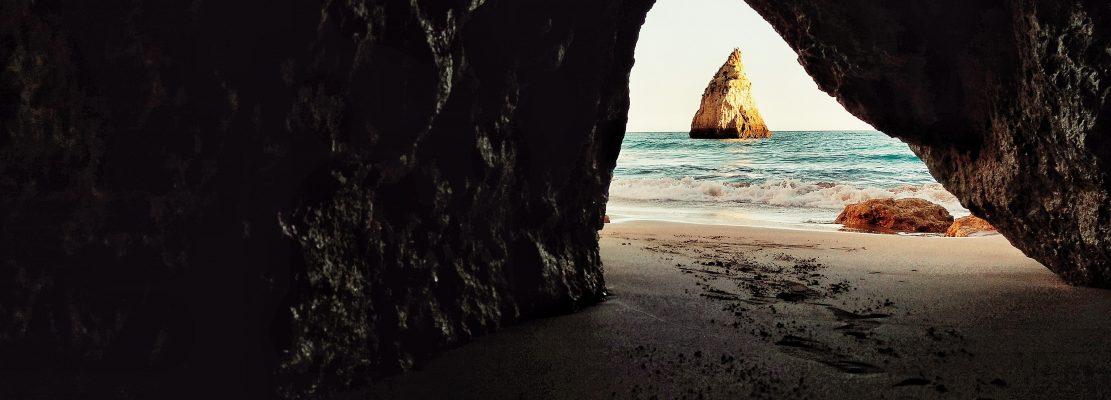
Natural Caves in Ibiza and Formentera: 5 Highlights
OpenBoats
Ibiza is known for its beaches and turquoise water, but the island also has a remarkable landscape beneath its limestone cliffs. Its natural caves range from chambers you can explore on a guided visit to sea caves that are suitable only for properly trained divers. Some places are best admired from the surrounding coast rather than entered at all.
Which natural caves in Ibiza are worth knowing about? Start with Can Marçà in Port de Sant Miquel for an organised underground visit. Na Coloms, also called the Cave of Light, is spectacular but dangerous and not a casual swimming destination. La Catedral near Cala Llonga is a specialist scuba-diving site. The historic Cave of Santa Agnès is close to Sant Antoni, while Sa Columna takes our guide across to Formentera.
At Open Boats, we want you to enjoy the island responsibly. This guide explains what makes each cave special, how its access differs and when a boat trip might complement your plans. We do not recommend entering hazardous caves independently, and our boat hire should not be mistaken for a guided caving or technical diving service.
Five natural caves in Ibiza and Formentera at a glance
| Cave | Location | Best way to experience it | Access considerations |
|---|---|---|---|
| Can Marçà | Port de Sant Miquel, north Ibiza | Organised guided cave tour | Managed visitor attraction; check current opening arrangements |
| Na Coloms / Cave of Light | Remote north-western Ibiza coast | Learn about the landscape; enjoy safer surrounding viewpoints | Exposed and hazardous; never treat the water-filled shaft as a swimming stop |
| La Catedral / Cala Llonga Cave | East Ibiza, near Cala Llonga | Professionally supervised scuba diving | Underwater cave environment; appropriate training and conditions are essential |
| Sa Columna | Cliffs around La Mola, Formentera | Coastal scenery and specialist local information | Not a standard visitor attraction; access and suitability require local verification |
| Cave of Santa Agnès | Near Sant Antoni, west Ibiza | Historical and cultural interest | Not a conventional walk-in cave attraction; public access is not assured |
These are five different kinds of experience, not five interchangeable excursions. A family-friendly show cave, an underwater cavern and a remote cliff formation require completely different planning.
1. Can Marçà: Ibiza’s best-known cave to visit
Can Marçà (Cova de Can Marçà) sits above the bay of Port de Sant Miquel on the north coast of Ibiza. Its limestone formations, passageways and dramatic setting make it one of the island’s most established underground attractions. Visitors experience the cave as part of an organised tour, rather than attempting to explore unmarked passages on their own.
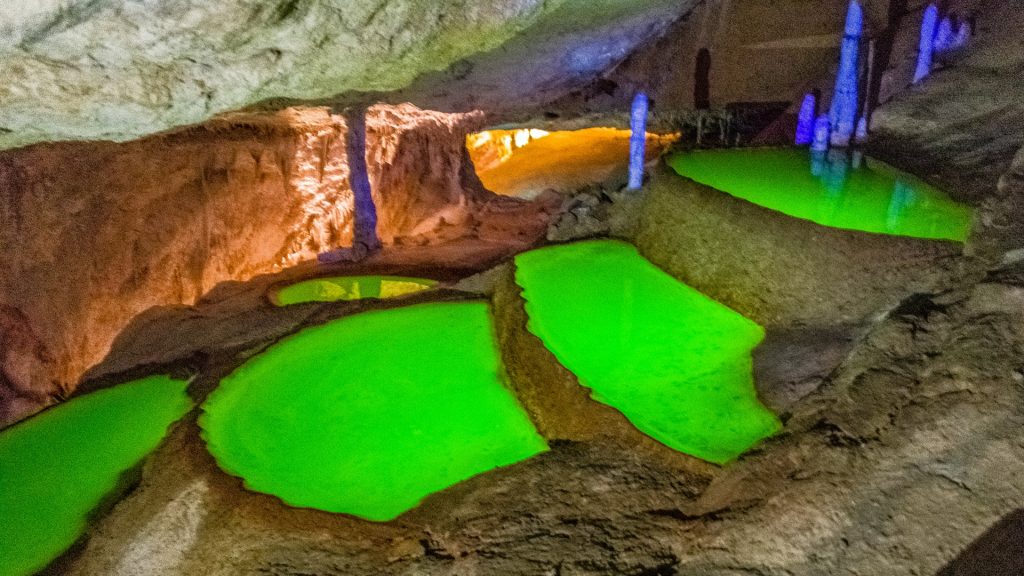
The visit is generally described as lasting around 40 minutes. Along the way, natural rock features are complemented by lighting and water effects; the viewpoint over Port de Sant Miquel is another highlight. Tourism authorities also associate the cave with a history of smugglers using the coastal cliffs. Those stories are part of its appeal, but the geological formations are the main attraction.
How do you visit Can Marçà?
Travel to the Port de Sant Miquel area by road, then follow the signs and the site’s visitor arrangements. Check opening times, tickets, accessibility and guided-tour departures before making the journey, as arrangements can change by season. The cave has steps and uneven surfaces, so travellers with reduced mobility should contact the operator about access before visiting.
For the latest practical information, consult the official Can Marçà visitor website. This is the best first choice for anyone looking for a straightforward cave visit on Ibiza rather than a challenging outdoor expedition.
What can you combine with the visit?
Port de Sant Miquel and the surrounding northern coastline are worth allowing time for. Rather than rushing to another distant attraction, spend part of the day exploring the bay, enjoying lunch or discovering quieter coastal viewpoints. Our guide to coves in northern Ibiza can help you decide which nearby stops fit your itinerary.
2. Na Coloms: the Cave of Light on Ibiza’s wild coast
Ullal de na Coloms, also known as Na Coloms or the Cave of Light, is a dramatic sea-connected shaft on Ibiza’s remote north-western coast, in the wider area of Sant Mateu d’Albarca. Light reflecting through the water gives the cavern its vivid blue appearance. Photographs often make it look like a hidden natural swimming pool. That impression is misleading.
The surrounding cliffs and steep terrain are difficult, and the water-filled chamber connects with the sea through a submerged passage. Getting into the water is not the same as being able to get out. Visitors have needed specialist rescue assistance here, and a fatal incident was reported in 2023. No attractive photograph or sunny forecast can remove the risks of the location.
Is it safe to swim in the Cave of Light?
No: we would not recommend Na Coloms as a recreational swimming or cliff-jumping spot. The exit is hazardous, the terrain can be slippery and remote, and sea conditions can change. An underwater route should never be presented as a normal way for a holidaymaker to leave the cave. Even strong swimmers can be overwhelmed by the conditions.
If you are interested in the site for its geology or photography, seek advice from a properly qualified local outdoor professional about whether a viewpoint-based visit is appropriate. Do not descend independently, jump in or follow a social-media video as route instructions. If conditions, access restrictions or your experience make the visit unsuitable, choose a safer coastal walk instead.
Where can you explore nearby without entering the cave?
The rugged landscape around Cala d’Albarca (Cala Aubarca) is one of the area’s natural attractions, particularly its impressive cliffs and rock formations. Paths can still be demanding, so this is not an automatic easy alternative. For general context, read our Cala Aubarca guide before deciding whether this part of the island suits your plans.
3. La Catedral: an underwater cave near Cala Llonga
La Catedral, often referred to as the Cala Llonga Cave, is a well-known scuba-diving site on the east coast of Ibiza, close to Cala Llonga and south of Santa Eulària des Riu. It takes its name from the shape and scale of the cavern, where light and rock formations create a striking underwater scene.
This is not a show cave that you walk into from the beach. Reaching and exploring it involves scuba-diving activity, specialist equipment and an operator who knows the site. Published descriptions of its depth and route can vary according to the dive profile, so we would not give an unsupported universal depth or describe it as suitable for every qualification.
Who should visit La Catedral?
Visitors considering La Catedral should speak to a professional dive centre about certification, recent diving experience, overhead environments, the planned dive and the prevailing sea conditions. Being comfortable snorkelling at the surface does not qualify someone to enter an underwater cave.
If you would rather admire Ibiza’s underwater world without cave diving, look at our guide to the best snorkelling spots in Ibiza. It explains where to enjoy clear water and rocky seabeds without presenting technical diving environments as casual swim stops.
4. Sa Columna: caves beneath Formentera’s La Mola cliffs
Another place worth knowing about is Sa Columna, a name associated in local descriptions with caves around the cliffs of El Pilar de la Mola, Formentera. The dramatic coastline of La Mola is a genuine feature of the island: tall cliffs, rock openings and sea-shaped formations give this part of Formentera a very different character from its celebrated sandy beaches.
There is, however, an important distinction between describing this landscape and promising a particular cave visit. Publicly available descriptions of Sa Columna do not provide enough consistent, current access information for us to recommend a route, swimming entrance, safe boat approach or guided visitor experience. We therefore include it as a location of interest rather than a ready-to-book attraction.
Can you visit Sa Columna on a day trip from Ibiza?
Formentera can be visited from Ibiza, but that does not mean Sa Columna itself is accessible or appropriate for every visitor or vessel. If you are considering the cliffs of La Mola, research the available walking routes, transport and viewpoints, and obtain specialist local advice before planning any cave activity. Never approach a cliff opening or enter a sea cave simply because it appears reachable by boat.
The official Formentera tourism information on Camí de Sa Pujada is a more useful starting point for appreciating the island’s cliff landscapes on land. The walk is not presented as an entrance to Sa Columna.
5. The Cave of Santa Agnès: history near Sant Antoni
The Cave of Santa Agnès (Santa Inés) is different from the marine caves above. Near Sant Antoni de Portmany, it is associated with a historic underground chapel and religious traditions rather than a sea passage, guided geological tour or dive site. It is often described as one of Ibiza’s oldest places of worship, although claims about its precise age and status should be treated as historical tradition rather than an established tourist ranking.
The cave is linked with the area around Sa Capella, making it a point of cultural interest for travellers who want to understand more of Ibiza beyond the beaches. Its status and access arrangements are not equivalent to those of Can Marçà, though. Do not assume you can enter it on arrival; access may be restricted or available only on particular occasions.
What can you do around Sant Antoni instead?
Even without entering the historic cave, Sant Antoni provides a useful base for coastal walks, local heritage and west-coast excursions. Our things to do in San Antonio guide offers practical ideas for fitting these experiences into a visit.
Can you visit Ibiza’s natural caves by boat?
A boat can be a wonderful way to appreciate Ibiza’s cliffs, coves and coastal geology, but not every natural cave can be entered from the water, and a boat trip is not a substitute for cave-diving or climbing instruction. Can Marçà is primarily a land-based guided attraction; La Catedral requires a specialist dive operator; and Na Coloms is not a casual swimming destination.
At Open Boats, we operate from Sant Antoni de Portmany and offer boat hire options for discovering suitable stretches of the island’s coast. We can discuss our boat hire with a skipper and the available itineraries, but we do not promise access to the specific caves in this article. The right route depends on the boat, its operating limits, the weather, protected areas and the captain’s assessment.
On a suitable coastal outing, the landscape itself can be the highlight: layered limestone, small coves, rock arches and changes in water colour can be enjoyed without attempting to land on rocks or enter confined passages. If you want to discuss a realistic route for your dates, contact our team before booking.
How to plan a cave-themed day in Ibiza safely
Match the experience to your ability
For an accessible introduction to Ibiza’s underground scenery, consider Can Marçà and check its guided-tour conditions. For scuba diving, choose a certified operator and describe your qualifications honestly. For remote coastal walks, assess the terrain, heat, weather and the return journey, not just the destination photographed online.
Keep an eye on weather and access restrictions
Wind, swell, rainfall and changing daylight matter near cliffs and caves. Walking paths can be slippery or poorly marked, while sea caves can be dangerous even when a nearby bay looks calm. Never assume that all of Ibiza’s caves are open, publicly accessible or safe to enter. Respect barriers, private property and protected natural areas.
Pack for the route you have actually chosen
Water, sun protection, sturdy footwear and a charged phone are sensible basics for a land excursion. More demanding routes need proper planning and suitable equipment, and phone coverage cannot be relied upon everywhere. Diving excursions require the safety equipment and supervision specified by the dive operator. Avoid improvising technical activities with ordinary swimming gear.
Plan around one main attraction
Can Marçà can be part of a relaxed north-coast day. A specialist dive at La Catedral needs its own schedule and pre-dive preparation. Na Coloms and Sa Columna should never be squeezed into an itinerary as spontaneous cave-entry stops. A slower, realistic day often makes for a better experience than trying to tick off every name on a list.
Frequently asked questions about natural caves in Ibiza
What is the easiest natural cave to visit in Ibiza?
Can Marçà, above Port de Sant Miquel, is the clearest choice for a conventional visitor experience because it operates guided tours. Check its current opening times, ticket arrangements and accessibility before travelling.
Is the Cave of Light in Ibiza safe for swimming?
No. Na Coloms, also known as the Cave of Light, is a hazardous sea-connected shaft with difficult exits. We do not recommend swimming or jumping into it as a leisure activity.
Where is La Catedral cave in Ibiza?
La Catedral is an underwater cave-diving site near Cala Llonga on Ibiza’s east coast. It is not a walk-in tourist cave; a professional dive operator should assess any proposed visit.
Can you visit Can Marçà without scuba-diving equipment?
Yes. Can Marçà is a land-based guided cave attraction, not a scuba-diving site. Visitors follow the organised tour route, subject to the operator’s arrangements.
Are there natural caves in Formentera?
Yes. Formentera has rocky cliffs and cave formations, including locations described around La Mola. Sa Columna is mentioned in local guides, but its current visitor access cannot be assumed.
Can we visit the caves on an Open Boats rental?
We can advise on suitable coastal itineraries from Sant Antoni, but we do not guarantee access to the caves listed here. Some are reached by land, others require professional diving support, and others are unsafe or unsuitable for casual visits.
When is the best time of year to explore Ibiza’s caves?
It depends on the cave. Check Can Marçà’s current guided-tour timetable, and plan any coastal walking or diving around conditions rather than a fixed month. Avoid exposed sites during unsuitable weather.
Discover Ibiza’s coastline with Open Boats
Ibiza’s natural caves reveal another side of the island, but the most rewarding way to explore them is to understand what each place allows. Choose a guided cave visit for Can Marçà, a qualified dive operator for underwater sites and safer viewpoints for exposed coastlines. With a suitable boat and itinerary, we can help you experience the beauty of Ibiza’s west coast without treating dangerous caves as tourist swimming pools.