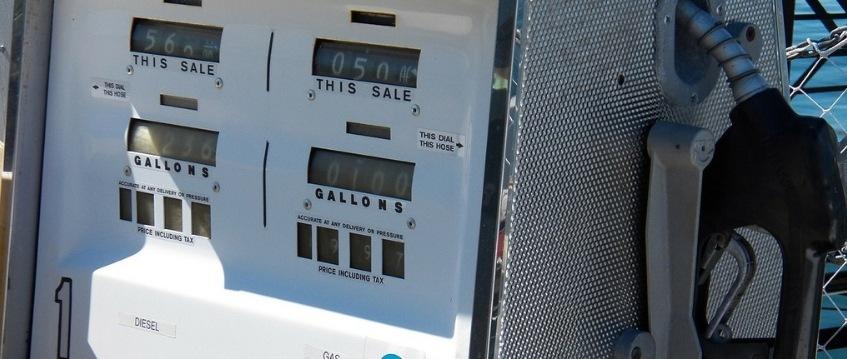
How Much Fuel Does a Boat Use? A Practical Guide
OpenBoats
How much fuel does a boat use? There is no single figure for every boat. Fuel consumption depends on the engine, the hull, how fast you travel, the number of people on board and the conditions at sea. A short, relaxed trip along the coast can use considerably less fuel than a long journey at high speed.
If you are planning to hire a boat in Ibiza, knowing how to estimate fuel use can help you choose a suitable vessel, plan a realistic route and understand what you may need to pay on top of the rental price.
At Open Boats, we regularly help visitors plan boat trips from Sant Antoni de Portmany. The most useful question is not simply how many horsepower a boat has, but how much fuel that particular boat is likely to use on the route you want to take.
At a glance: how to estimate boat fuel consumption
- Fuel consumption per hour: the number of litres the engine uses while running at a particular speed or engine setting.
- Fuel consumption per nautical mile: the amount needed to cover a given distance; often more useful when planning a trip.
- Total fuel for your outing: depends on the route, actual engine-running time, manoeuvring and sea conditions, not simply the number of hours you have hired the boat for.
- Fuel costs: depend on the litres used, the applicable fuel price and whether fuel is included in your booking.
- Safety: always plan an appropriate reserve and follow the operator’s instructions; never set out expecting to use every litre in the tank.
How many litres of fuel does a boat use?
A small motorboat and a larger, more powerful boat can have very different fuel requirements. Even two boats with similar engine power may use different amounts of petrol because their hulls, weight, propellers and usual cruising speeds are not the same.
For some of its smaller boats, Open Boats’ published rental information gives a reference of around 15–20 litres for a half-day outing. This is a guide to the type of use described there, not a fixed allowance or a guaranteed figure. Stops, route choice, speed, passenger load and weather can all change the result. It should not be applied to larger boats or to a trip to Formentera.
For a full day, the amount used can vary substantially: a relaxed outing with short journeys and long swimming stops is not comparable with continuous high-speed cruising. The hire period on its own is therefore not enough to estimate the litres you will need.
For a dependable estimate, ask for the fuel consumption of your chosen boat at its normal cruising speed, together with an estimate for the route you are considering. This is much more informative than relying on horsepower alone.
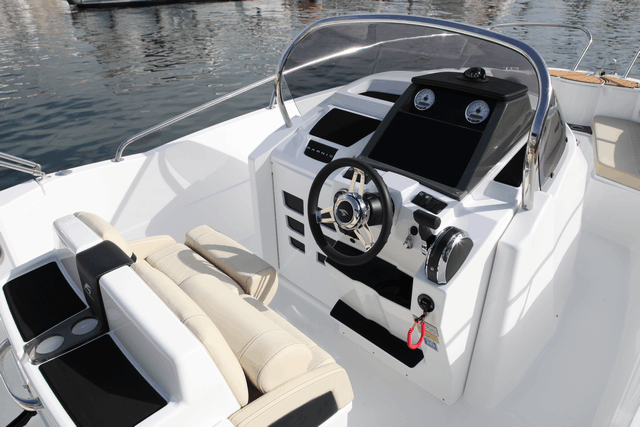
Boat fuel consumption per hour versus per nautical mile
You will usually see fuel consumption expressed in one of two ways:
- Litres per hour (L/h): useful for estimating how much fuel an engine will burn over a known running time.
- Litres per nautical mile (L/nm): useful for comparing the efficiency of different cruising speeds over a route of a particular distance.
These figures are connected, but they answer different questions. A boat may burn fewer litres per hour at a slower speed yet take so much longer to cover the distance that the total fuel used is not necessarily lower. On many planing motorboats, the most economical speed per mile is a comfortable, steady cruising speed rather than either maximum throttle or the slowest possible movement.
Engine manufacturer Mercury Marine explains how to compare speed and fuel consumption to identify an efficient cruising setting for a particular boat. There is no one ideal engine speed that applies to every vessel.
How to calculate fuel consumption for a boat trip
You can make a useful first estimate in four steps. You will need a planned distance, a realistic average speed and the boat’s expected fuel consumption at that speed.
- Work out the return distance. Include the journey back to your departure port, not just the outward leg.
- Estimate your average cruising speed. Boat speed is usually expressed in knots, meaning nautical miles per hour.
- Calculate engine-running time. Divide the distance in nautical miles by the expected speed in knots.
- Calculate fuel used and add a reserve. Multiply engine-running time by fuel consumption in litres per hour, then allow for manoeuvring, changes in conditions and an appropriate safety margin.
Worked example: a 20-nautical-mile return trip
Imagine a hypothetical boat covering 20 nautical miles at an average speed of 10 knots. Its engine would be running for approximately two hours. If the boat used 12 litres per hour under those conditions, the calculation would be:
- Engine-running time: 20 nautical miles ÷ 10 knots = 2 hours.
- Estimated fuel used: 2 hours × 12 L/h = 24 litres.
- Planning requirement: more than 24 litres available, allowing for an appropriate reserve and any additional engine use.
Important: the speed and consumption in this example are invented solely to demonstrate the arithmetic. They are not measured performance figures for an Open Boats vessel and must not be used to decide whether a real boat has enough fuel for a trip.
If you have a reliable figure for litres per nautical mile, the calculation is simpler: multiply the total route distance by that figure, then account for a suitable reserve and additional manoeuvring.
What affects how much fuel a boat burns?
1. Engine type, power and condition
Petrol outboards, two-stroke engines, four-stroke engines and marine diesels have different operating characteristics. An engine with more horsepower is capable of delivering more power, but that does not mean it uses its full rated output throughout a journey.
Rules of thumb that multiply horsepower by a fixed number of litres per hour can be misleading if engine load and operating conditions are not specified. A manufacturer’s fuel-flow data, or reliable measurements for that particular boat, give a better basis for planning.
2. Speed and engine revolutions
Increasing speed often increases fuel consumption sharply, especially when pushing a motorboat towards its maximum performance. Repeated hard acceleration and unnecessary high-speed running can also increase the amount burned over a day.
However, it is not always true that the slowest speed gives the lowest consumption per nautical mile. Some planing boats use fuel most efficiently once they are properly on the plane at an appropriate cruising speed. Follow the handover guidance for the boat you have hired rather than guessing at the best throttle setting.
3. Hull shape, weight and number of passengers
A heavier boat needs more energy to move. The hull design, onboard equipment, fuel and water load, and the number of passengers can all influence performance. Distribute weight safely as instructed; never overload a boat to save money by taking more people than its authorised capacity.
4. Wind, waves and currents
A route that feels straightforward in calm conditions can take longer and use more fuel in wind and swell. Travelling into rough seas may require a slower speed or a change of course. If conditions are unsuitable, the right decision may be to change or cancel the plan rather than try to maintain the original schedule.
5. The route and time spent using the engine
A four-hour rental does not necessarily mean four hours of fuel consumption at cruising speed. You may spend part of that time swimming or enjoying the scenery with the engine switched off. Conversely, a longer route with few stops can involve much more engine use, even if the rental duration is similar.
How much does boat fuel cost in Ibiza?
To estimate the fuel cost of a boat trip, multiply the number of litres you expect to use by the price per litre that applies to your rental.
For example, if a trip used 24 litres and the applicable price were €2 per litre, the calculation would be 24 × €2 = €48. This is a mathematical example, not a live fuel price or a quote from Open Boats.
Be careful when comparing advertised boat-hire prices. Two bookings can look similar until you discover that one includes fuel and the other charges for it separately.
Is fuel included when you hire a boat from Open Boats?
It depends on the type of booking:
- Self-drive boat hire: Open Boats’ published information for its self-drive rentals states that petrol is charged separately. Confirm the arrangements for your specific boat when booking.
- Boat hire with a skipper: the skippered packages currently advertised by Open Boats include fuel in the listed package, alongside the boat and skipper. Confirm the precise scope of your chosen booking and any requested extras before paying.
This difference can have a meaningful effect on the total price of your day. If your main concern is staying within a fixed budget, ask for an all-in cost or an explanation of how fuel is charged before confirming the reservation.
How to use less fuel when navigating around Ibiza
In practice, reducing fuel use is largely about sensible preparation and steady, efficient navigation rather than trying to apply one formula to every engine.
- Plan a realistic route. Choose destinations that suit your boat, available time and departure point. Open Boats operates from San Antonio, so a local west-coast itinerary is very different from a longer excursion across the islands.
- Keep to an efficient cruising speed. Avoid unnecessary full-throttle running, but do not assume that creeping along is always the most efficient option per mile.
- Use the throttle smoothly. Sudden acceleration and repeated changes of pace can waste fuel, particularly on a motorboat.
- Monitor fuel and engine information. Check the gauges before departure and during the trip. If a reading seems unreliable, contact the operator rather than relying on guesswork.
- Follow the boat-specific briefing. Use the recommended cruising settings, route limits and equipment correctly. Trim and other adjustments affect efficiency, but they should only be used as instructed.
- Allow for changing conditions. Wind, waves and currents can make the return journey more demanding than the outward leg.
- Keep an appropriate reserve. Do not plan to arrive back at port with an empty tank.
The Royal Yachting Association recommends checking fuel and allowing an adequate reserve before setting off. The exact amount you need depends on the vessel, itinerary, conditions and instructions from your operator or skipper.
Fuel planning for a boat trip from San Antonio
A sensible fuel estimate starts with the actual itinerary. A relaxed trip along the nearby coast, with opportunities to stop for a swim, is not comparable with a full-day journey involving long distances and prolonged engine use.
Before leaving the port, confirm which areas you can visit with your selected boat and how long it should take to return safely. Weather, the boat’s permitted navigation area and the skipper’s instructions always take priority over an itinerary you have seen online.
Our experience on the coast of Ibiza and Formentera helps us advise visitors on practical choices for their day at sea. If you are unsure whether a proposed route is realistic for your budget, ask the Open Boats team about the boat, fuel arrangements and likely running time before booking.
Frequently asked questions about boat fuel consumption
How much fuel does a small motorboat use in a day?
It depends on the engine and how the boat is used. Open Boats publishes a reference of approximately 15–20 litres for a half-day on certain smaller boats, but that does not translate into a fixed full-day figure. A day with short journeys and long stops can consume much less than a day of continuous navigation.
Does a boat use fuel while the engine is idling?
Yes. An engine that is running uses fuel even when the boat is not moving. The amount is normally different from the consumption at cruising speed. If you are safely stopped for an extended period, follow the operator’s guidance on when to switch the engine off.
Does driving a boat more slowly always save petrol?
Not necessarily. Slowing down often reduces litres burned per hour, but you may spend longer covering the same distance. For planning a route, fuel used per nautical mile is more useful than litres per hour alone.
How do I calculate fuel for a return boat journey?
Add together the outward and return distances, estimate the engine-running time at a realistic average speed, and multiply that time by the boat’s expected hourly consumption. Add a suitable reserve and allow for manoeuvring and changes in sea conditions. Use boat-specific data rather than a universal estimate.
Is petrol included in an Ibiza boat rental?
Not always. At Open Boats, published terms for self-drive rentals indicate that petrol is charged separately, while advertised skippered packages include fuel. Check the inclusions for your exact boat and reservation.
Can I estimate fuel use from the engine’s horsepower?
Horsepower gives some indication of what the engine can deliver, but it does not tell you the fuel consumption at your planned cruising speed. The hull, load and engine settings also matter. Ask for fuel-flow information or an estimate based on the actual boat and route.
What should I do if I am worried about running low on fuel?
Do not continue towards a distant destination hoping the fuel will last. Follow your rental briefing, make a safe plan to return or seek assistance, and contact the operator promptly. If there is an immediate danger to people or the vessel, use the appropriate maritime emergency procedures.
Enjoy the coast without worrying about surprises
Knowing how much fuel a boat uses helps you plan a more relaxed and realistic outing. The best estimate is specific to the vessel, route and conditions, and it should always include a safety margin.
Before you set off from San Antonio, check whether petrol is included, understand how any extra fuel charges are calculated and choose a route that suits your boat. If you would like help comparing options, explore boat hire in Ibiza with Open Boats and ask our team for the details of your preferred rental.