Cala Llentrisca: Ibiza’s Hidden Pebble Cove
OpenBoats
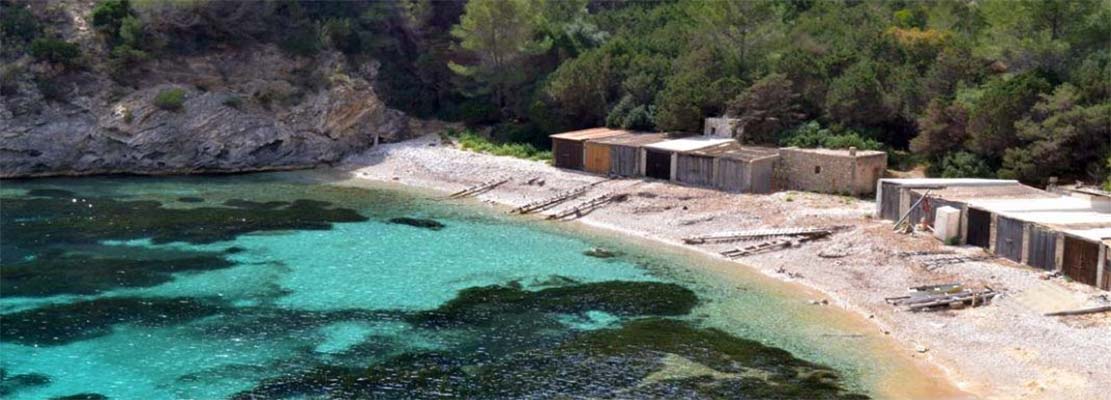
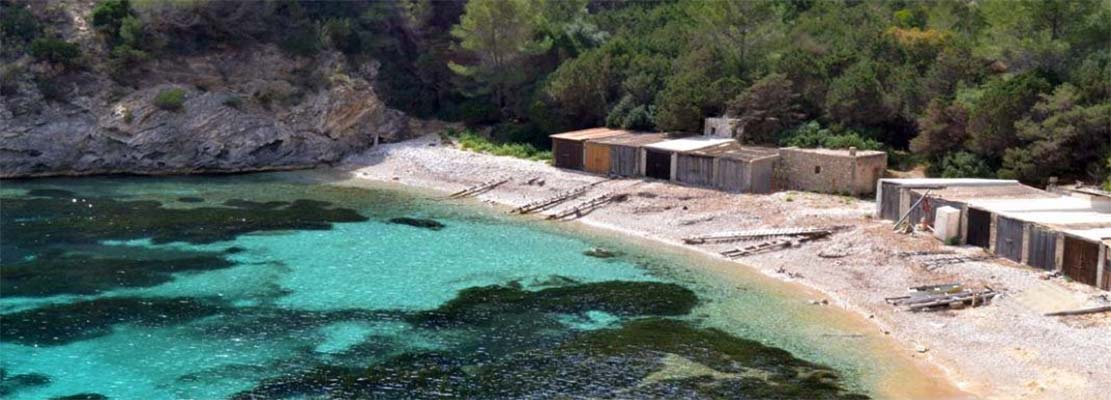
Cala Llentrisca is one of Ibiza’s quieter coastal treasures. Hidden below the cliffs near Es Cubells, this small crescent-shaped cove is a world away from the island’s busy beaches and beach clubs. Instead of fine sand and rows of sunbeds, you will find a pebble shoreline, clear turquoise water and traditional fishermen’s boathouses.
Getting here requires a walk, which is part of the appeal. If you enjoy discovering less-developed corners of Ibiza, Cala Llentrisca is well worth considering. Here is how to find it, what makes it special and how to prepare for your visit.
Where is Cala Llentrisca in Ibiza?
Cala Llentrisca lies on the south-west coast of Ibiza, beneath Es Cubells in the municipality of Sant Josep de sa Talaia. It is close to Cap Llentrisca, the headland from which the cove takes its name, in a rugged stretch of coastline not far from the wider Es Vedrà area.
Surrounded by steep hillsides, pine trees and rocky cliffs, the cove feels far more remote than its position on the island might suggest. Its small, curved beach is approximately 100 metres long and 10 metres wide, according to the original Open Boats guide. The shore is made up mainly of smooth pebbles, locally called còdols, rather than sand.
What makes Cala Llentrisca so special?
A peaceful cove away from the crowds
Cala Llentrisca has remained relatively secluded largely because it cannot be reached directly by car. There are no beach clubs, organised rows of parasols or busy promenades. Although you may meet other walkers, swimmers or people arriving by sea, the setting is noticeably more tranquil than at many of Ibiza’s best-known beaches.
Part of its charm is the sense of discovering an older, quieter Ibiza. The surrounding cliffs limit access, the coastline feels largely undeveloped and the scenery takes centre stage.
Traditional fishermen’s huts
Along the shore, you will see a series of traditional fishermen’s boathouses, known locally as escars. These shelters were used to store small fishing boats and equipment. Their simple appearance, close to the water’s edge, is a reminder of the island’s maritime heritage.
They are not visitor facilities, so admire them respectfully and avoid entering or disturbing any boats or equipment.
Clear water and excellent snorkelling potential
Another reason to visit Cala Llentrisca is its transparent Mediterranean water. When the sea is calm, the rocky seabed makes the cove especially appealing for snorkelling in Ibiza. You may spot small fish around submerged rocks and areas of seagrass.
The seabed is varied, with rock, patches of sand and meadows of Posidonia oceanica. Posidonia is an important Mediterranean seagrass that provides habitat for marine life. Washed-up leaves on the beach are a natural part of this ecosystem, not rubbish.
Always check the conditions before swimming or snorkelling. A secluded cove without lifeguards is not the place to take risks when there is swell or poor visibility.
How to get to Cala Llentrisca
The usual land route starts in Es Cubells. From the village, follow the road that descends from the area of the main square towards the small coastal residential area. The original Open Boats article describes the approach through the Parc d’Es Cubells area; the official Sant Josep tourism guide confirms that, once the road ends, the final access is on foot.
- Drive towards Es Cubells in the south-west of Ibiza.
- Follow the descending road towards the coastal residential area, respecting private access and road signs.
- Leave your vehicle only where parking is permitted before the road becomes a footpath. There is no formal beach car park.
- Continue westwards on foot along the narrow coastal path for approximately 700 metres until you reach Cala Llentrisca.
The path includes uneven ground and slopes, and the return walk can feel demanding in summer heat. Wear sturdy shoes and allow enough time for both directions. There is also a more difficult approach from higher ground, but the Es Cubells route is the more practical option for most visitors.
For current access information, consult the official Sant Josep tourism guide to Cala Llentrisca.
What to bring to Cala Llentrisca
There are no services at Cala Llentrisca: no restaurant, beach bar, toilets, showers or lifeguard station. Pack what you need before starting the walk:
- Plenty of drinking water and something to eat, particularly in warmer weather.
- Comfortable walking shoes with good grip for the path.
- Water shoes if you find pebbles uncomfortable underfoot.
- A thick towel or beach mat, as the shore is stony rather than sandy.
- Sun cream, a hat and suitable clothing for the walk and time by the sea.
- A snorkel and mask if conditions are suitable and you are confident in the water.
- A bag for your rubbish so you can leave the cove as you found it.
The uneven access and lack of facilities make this a less suitable choice for visitors who need step-free access or a fully equipped family beach.
When is the best time to visit?
Morning is a good option, particularly in summer, because you can complete much of the walk before the hottest part of the day. If you want to sunbathe, bear in mind that the surrounding cliffs can cast shade over the beach later in the afternoon.
Visiting outside the busiest summer period may offer a quieter experience, but weather, sea conditions and daylight should always guide your plans. Bring what you need rather than relying on finding anything at the cove.
Secret places in Ibiza near Cala Llentrisca
If you are exploring this side of the island, consider combining your visit with a few nearby stops rather than trying to fit too much into one day:
- Es Cubells: a small village overlooking the rugged south-western coast and the starting point for the usual route to Cala Llentrisca.
- Ses Boques: another small coastal corner below Es Cubells. Check its separate access route before visiting.
- Cala d’Hort: a more accessible beach known for its views towards Es Vedrà, worth visiting as a separate stop by road.
For more inspiration, explore our guides to the best coves in Ibiza and quiet places to stay in Ibiza.
Can you visit Cala Llentrisca by boat?
The cove can be approached from the sea, but whether a visit is feasible depends on the departure point, vessel, weather and applicable navigation restrictions. Do not assume that every hire boat can reach it or that anchoring is permitted wherever you choose.
At Open Boats, we offer boat hire from Sant Antoni de Portmany. Our usual routes focus on suitable areas of Ibiza’s western coastline; Cala Llentrisca is not a standard destination for every boat or itinerary. If you are planning a day on the water, contact our team to ask about the boat options and routes appropriate for your plans.
Frequently asked questions about Cala Llentrisca
Where is Cala Llentrisca?
Cala Llentrisca is a secluded pebble cove below Es Cubells, on the south-west coast of Ibiza in the municipality of Sant Josep de sa Talaia.
Can you drive directly to Cala Llentrisca?
No. You can drive towards the coastal residential area from Es Cubells, but the final stretch is a footpath of approximately 700 metres.
Is Cala Llentrisca good for snorkelling?
Yes, when sea conditions are calm. Its clear water and rocky seabed make it a rewarding place to observe marine life, but there is no lifeguard service.
Does Cala Llentrisca have beach bars or other facilities?
No. There are no beach bars, toilets, showers or lifeguards. Bring drinking water, food, sun protection and suitable footwear.
Is Cala Llentrisca a sandy beach?
No. The shoreline consists mainly of smooth pebbles, so a padded beach mat and water shoes can make your visit more comfortable.