Cala Blanca in Ibiza: Exploring a Remote East-Coast Cove
OpenBoats
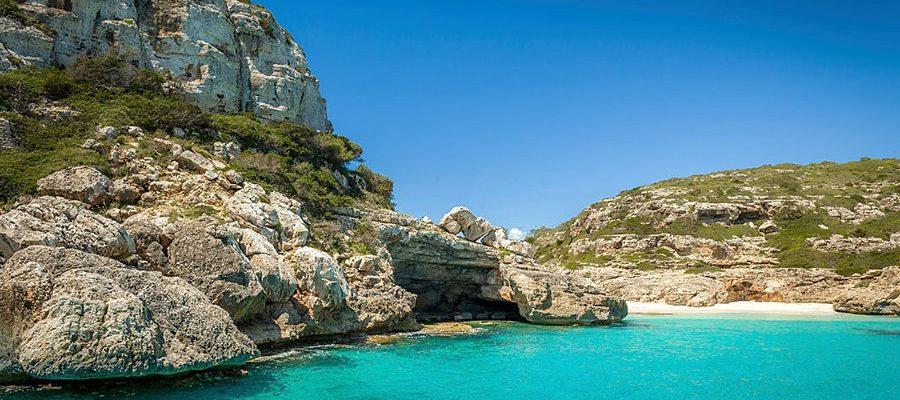
Cala Blanca in Ibiza is a secluded rocky cove on the island’s eastern coast, between Santa Eulària des Riu and Cala Llonga. Unlike the better-known resort beaches, it is surrounded by steep coastal slopes, Mediterranean vegetation and a shoreline of stones and rock rather than a wide stretch of sand.
Its dramatic landscape is part of the appeal, but so is the reason it demands caution: access can involve rough ground, steep sections and an unlit tunnel. Cala Blanca is not an ordinary beach-day recommendation, and the conditions can make a visit unsuitable for many travellers.
In this guide, we explain where Cala Blanca is, what you can realistically expect, the practical difficulties of getting there and what to consider before approaching it from the sea. At Open Boats, we want visitors to enjoy Ibiza’s coastline without confusing a beautiful location with an easy or risk-free destination.
Cala Blanca Ibiza at a glance
| Feature | What to know |
|---|---|
| Location | East coast of Ibiza, municipality of Santa Eulària des Riu, between Santa Eulària and Cala Llonga |
| Landscape | Rocky shoreline, steep cliffs, pine-covered surroundings and clear-looking Mediterranean water |
| Beach surface | Stones, shingle and larger rocks; no broad sandy area |
| Land access | Challenging footpaths; a long, unlit tunnel features in some described approaches |
| Facilities | No beach bar, lifeguard service or reliable on-site facilities to depend on |
| Suitable for | Experienced walkers assessing a route in suitable conditions, rather than visitors seeking an easy family beach |
| Boat access | Only where conditions, permitted navigation area and safe, lawful stopping arrangements allow |
Where is Cala Blanca in Ibiza?
Cala Blanca lies in the municipality of Santa Eulària des Riu, to the south of Santa Eulària town and north of Cala Llonga. The surrounding coast is characterised by abrupt hillsides and pine woodland, with small rocky inlets that are less straightforward to reach than the island’s developed beaches.
Its setting explains why Cala Blanca can feel remote despite being relatively close to populated parts of eastern Ibiza. The distance on a map is not a useful measure of how easy a location is to visit: the final approach and terrain matter much more.
Do not confuse Cala Blanca with Aigües Blanques (Aguas Blancas), a different beach further north on the island’s eastern side. They are separate locations with different access conditions.
What is Cala Blanca beach actually like?
A wild, narrow, stony shoreline
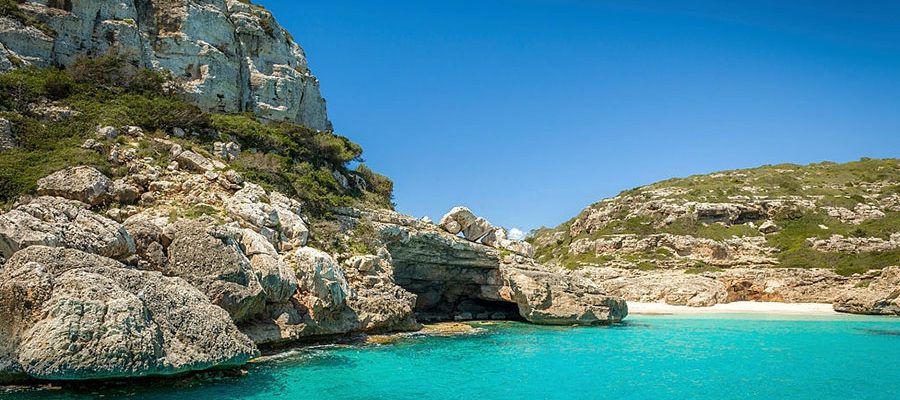
Cala Blanca is not a classic sandy beach with rows of sunloungers. The original Spanish guide describes a long, narrow shoreline broken up by pebbles, boulders and rocks that have fallen from the surrounding slopes. The shape and usable space can change with the sea and accumulated material, so precise beach dimensions should not be relied upon when planning a visit.
The rocky surroundings can make it difficult to find a comfortable place to sit, walk barefoot or enter the sea. Dried Posidonia oceanica washed ashore may also be present. This is a natural part of the Mediterranean coastal ecosystem, not simply rubbish to be removed.
Cliffs, pines and a sense of isolation
Much of the attraction lies in the coastline itself: layered rock formations, Mediterranean vegetation and views over the water. For photography and landscape appreciation, Cala Blanca is very different from the busy resort beaches nearby.
However, its quiet appearance should never be treated as evidence that a cliff edge, path or shoreline is stable. Rockfall, loose stones and steep drops are hazards in this type of terrain, especially after adverse weather.
Do not expect conventional beach services
You should not count on toilets, showers, a lifeguard, a beach bar or equipment hire at Cala Blanca. Shops and restaurants in the wider Santa Eulària or Cala Llonga areas are not the same as facilities available once you reach the cove. Carry your own drinking water and plan your return journey in advance.
How to get to Cala Blanca in Ibiza
By car: reach the surrounding area, not the water’s edge
Approaches to the Cala Blanca area are commonly described from the Santa Eulària and Cala Llonga road network, including the Siesta and Valverde surroundings. Driving can bring you closer to the coastal paths, but there is no straightforward road leading directly to a conventional beach car park at the shore.
The Spanish version of this guide describes reaching the Valverde area and continuing on foot. We have deliberately not retained its turn-by-turn directions or fixed walking times: rural tracks, legal parking options, barriers and path conditions can change, and a satnav route may not represent a safe public access route.
Park only where it is permitted, do not block entrances or emergency access and check the route before setting off. If the legal access or current state of the path is unclear, choose another place to visit rather than improvising down a cliffside.
On foot: rough ground and exposed sections
Walking routes around Cala Blanca can involve uneven gravel, loose rock, steep gradients and sections close to cliffs. This is not a step-free or family-friendly access path. Walking times published on different websites may refer to different starting points or viewpoints rather than the cove itself.
Wear hiking shoes with grip, take sufficient water, keep away from unstable edges and avoid setting off late in the day. If you are inexperienced, have limited mobility or are travelling with young children, the sensible choice is a more accessible beach.
The Cala Blanca tunnel: what visitors should know
One of the best-known details of Cala Blanca is the rock tunnel associated with access to the cove. It is described in the original Open Boats article and in local coverage of walking routes. It is unlit and should not be approached like a maintained visitor attraction.
Do not enter without confirming that access is lawful and safe on the day. Darkness, uneven ground, loose material and the possibility of restricted or unsuitable conditions make it inappropriate to encourage casual exploration. A phone torch alone should not be treated as adequate preparation for a hazardous route, and you should never force your way through a blocked or unsafe passage.
If you only want a coastal view, do not assume you need to traverse the tunnel or descend to the shoreline. Look for a safe, legally accessible viewing area instead, and remain clear of exposed cliff edges.
Is Cala Blanca safe to visit?
Cala Blanca demands particular care. Emergency services have carried out rescue operations involving people stranded or in difficulty on the cliffs around the cove. Local reporting includes a difficult rescue in October 2026, reinforcing why the terrain should not be underestimated.
This does not mean that every visit is dangerous, but it does mean that we would not describe the route as a simple beach walk. Before going:
- Check the weather and daylight: rain, wind, wet rock and fading light can make a difficult approach worse.
- Assess the route honestly: do not rely on an old track description or follow informal shortcuts simply because they appear on a map.
- Do not go alone into remote terrain: tell someone your plans and agree a return time.
- Stay away from unstable slopes: avoid scrambling down cliffs, using improvised ropes or approaching rockfall areas.
- Turn back early: if the route is unclear, exposed or beyond your ability, there is no reason to press on.
- Know the emergency number: call 112 in an emergency in the Balearic Islands.
For background, local media documented a rescue on the cliffs of Cala Blanca in October 2026. It is a reason to take access advice seriously, not an invitation to attempt the route as an adventure challenge.
Can you swim or snorkel at Cala Blanca?
Clear water and a rocky seabed may look appealing for swimming or snorkelling, but they are not proof of safe conditions. Waves, surge, slippery rocks, changing currents and difficult entry or exit points may make getting into — or back out of — the water unsafe.
There is no reason to enter the sea if conditions are not suitable or if you cannot identify a safe way back to shore. Do not swim alone or near unstable rock faces. Visitors looking primarily for a comfortable swim or an easy snorkelling session will often be better served by a more accessible cove.
For other ideas, read our guide to snorkelling spots in Ibiza, where choosing the right conditions is just as important as choosing the location.
Can you reach Cala Blanca by boat?
Seeing the eastern coastline from the sea may be an alternative to attempting a difficult descent, but reaching the area by boat does not automatically mean you can safely anchor, land or swim ashore. Cliffs, seabed features, exposure, weather and any applicable restrictions need to be assessed for the specific vessel and day.
At Open Boats, we operate from Sant Antoni de Portmany on Ibiza’s west coast. Cala Blanca is on the opposite side of the island. We do not present it as a standard destination for all our boats or rental arrangements, particularly vessels with limited permitted navigation areas. A suitable boat and skipper, route length, sea state, authorised navigation area and legal stopping options would all need to be checked in advance.
We offer boat hire with a skipper in Ibiza, but that does not constitute a promise that Cala Blanca can be included in a particular itinerary. We will help you review what is practical from our departure point and suggest more suitable alternatives when necessary.
Protect the seabed and respect anchoring rules
In the Balearic Islands, anchoring on living Posidonia oceanica meadows is generally prohibited. Never assume that clear water or an apparently empty bay means anchoring is allowed. Check current regulations, charts and the designated stopping arrangements before any manoeuvre, and keep a safe distance if no lawful option is available.
The Balearic Government’s Posidonia guidance explains the restrictions and points to official mapping of protected seagrass habitats.
When is the best time to visit Cala Blanca?
For walking and enjoying the coastal scenery, milder temperatures in spring or early autumn can make an outing more comfortable than the hottest part of summer. Even then, safe access depends on the actual weather, the condition of the ground and daylight, rather than the month alone.
If you are considering a swim, check the sea conditions separately. Cala Blanca’s apparent shelter does not guarantee calm water, and its eastern location is not a reason to promise the famous west-coast Ibiza sunset experience.
What should you bring?
- Sturdy walking footwear: hiking shoes with good grip, not flip-flops for the approach.
- Water, snacks and sun protection: there are no facilities to rely on at the cove.
- A charged phone and offline map: check coverage, but do not depend on mobile navigation alone.
- A suitable light: if considering any dark passage, first verify that access is safe and permitted; a torch is not a substitute for appropriate experience or route assessment.
- A first-aid kit and a realistic plan: allow time for the return journey in daylight.
- A bag for your rubbish: leave the coastline as you found it.
Children, anyone who needs easy access and travellers who simply want to relax on the sand should choose a better-equipped beach rather than attempt Cala Blanca.
Other beaches and hidden coves near Cala Blanca
The good news is that you do not need to attempt a difficult descent to enjoy Ibiza’s eastern coastline.
- Cala Llonga: a more developed sandy bay, better suited to visitors who want beach facilities and a straightforward beach day.
- Santa Eulària beach: a convenient option near the town’s promenade and services.
- Other secluded coves: if you enjoy rocky landscapes but want to compare access difficulties, explore our guide to secret coves and beaches in Ibiza before choosing a route.
Travelling with children? Our family-friendly beaches in Ibiza guide is a more useful starting point than a remote cliff-backed cove.
Frequently asked questions about Cala Blanca in Ibiza
Where is Cala Blanca in Ibiza?
Cala Blanca is a secluded rocky cove on Ibiza’s east coast, within the municipality of Santa Eulària des Riu, between Santa Eulària and Cala Llonga. It is not the same beach as Aigües Blanques.
Is Cala Blanca Ibiza easy to reach?
No. There is no straightforward vehicle access to the shore. Described walking approaches involve rough ground and may include steep sections and an unlit tunnel, so you should verify safe and lawful access before attempting a visit.
Is there a tunnel at Cala Blanca?
Yes. Walking-route descriptions mention an unlit rock tunnel associated with access to Cala Blanca. It should not be treated as a maintained tourist attraction; do not enter unless access is permitted and conditions are demonstrably safe.
Is Cala Blanca suitable for families with young children?
It is not a recommended easy family beach. The rocky shore, difficult approaches and lack of facilities make nearby Cala Llonga or Santa Eulària beach more practical choices for many families.
Can you swim at Cala Blanca Ibiza?
Swimming depends on sea conditions and safe entry and exit points. Rocks, swell and currents can make the water unsuitable even when it looks clear. Never enter when conditions are unsafe or swim alone.
Can I visit Cala Blanca by boat with Open Boats?
Not as a guaranteed standard route. Open Boats departs from Sant Antoni on Ibiza’s west coast, while Cala Blanca is on the east. Any proposed visit depends on the boat, permitted navigation area, skipper arrangements, weather and lawful stopping conditions.
Are there restaurants or lifeguards at Cala Blanca?
Do not expect a lifeguard, toilets, showers or a beach bar at Cala Blanca. Restaurants and facilities in the wider Santa Eulària or Cala Llonga area are not facilities at the cove itself.
Explore Ibiza’s coastline with Open Boats
Cala Blanca shows how varied Ibiza’s coastline can be: a secluded setting and dramatic scenery, but also difficult terrain and practical limitations. The best plan is the one that fits your group, the conditions and the type of experience you want.
From our base in Sant Antoni, we can help you choose a suitable boat and discuss realistic coastal routes rather than promise access to a specific remote cala. Explore our boat hire options in Ibiza or contact our team to discuss your plans.